Prepare Your Spanish Exam With Mónica

Exam preparation

Prepare Your Spanish Exam With Mónica: A Certified Spanish Teacher and Examiner

Passing a Spanish exam takes more than knowing the language. It takes knowing the exam. As a native Spanish teacher and certified examiner based in Spain, I prepare students of every age for their Spanish exams, teaching the language itself alongside the technique that earns marks on the day. Because I know each exam from the inside, its structure, its marking, and exactly what assessors look for, my students walk in prepared, not just rehearsed.

I prepare students for school qualifications like IGCSE and A-Level, and for the official certificates, the DELE exam and SIELE, whether you're learning Spanish for study, for travel, or for professional purposes.

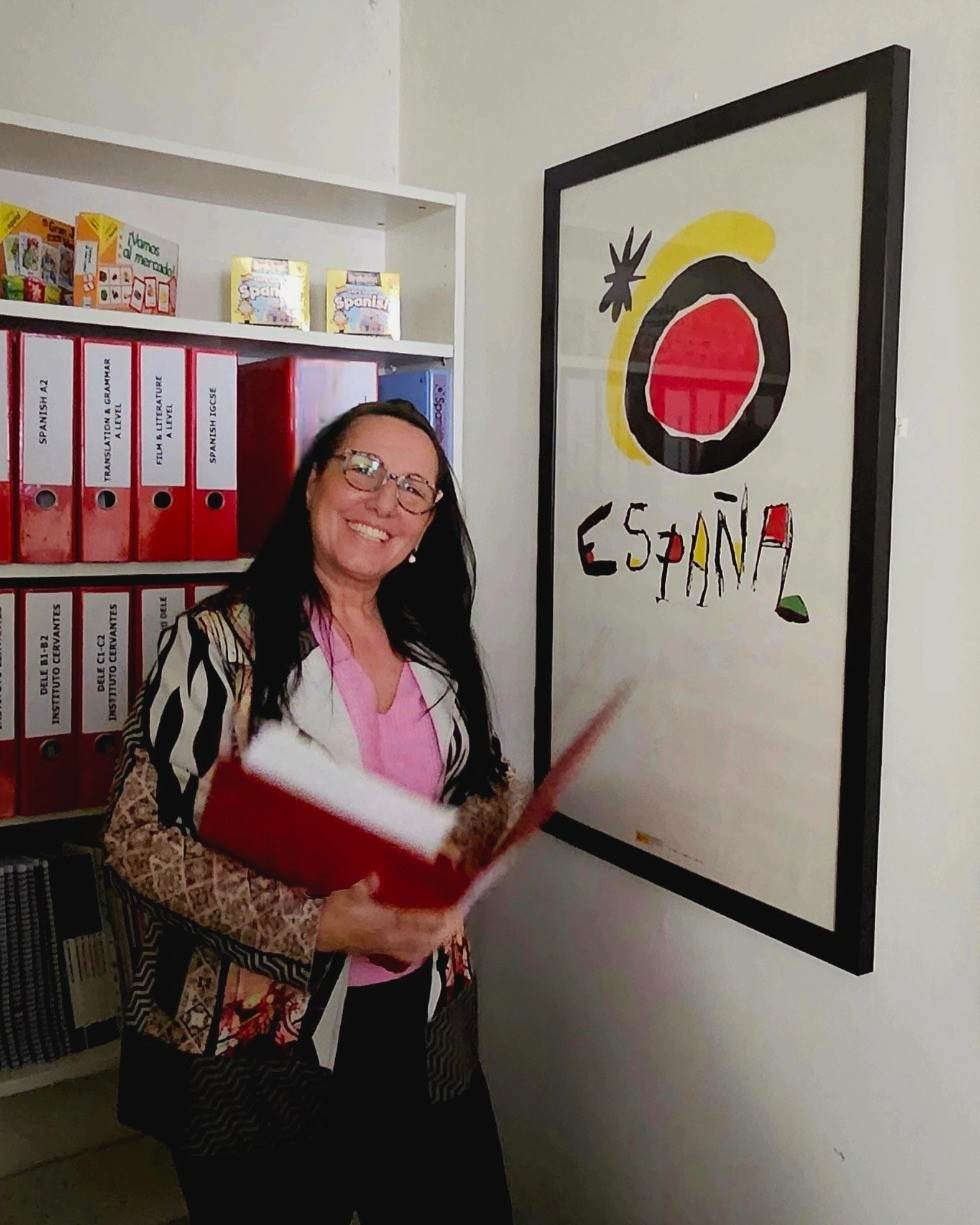
Mónica, native Spanish teacher, examiner and teacher trainer

I'm a native Spanish teacher, examiner and teacher trainer, specialising in helping learners build confidence and succeed in their Spanish goals

Where to start

Find the right Spanish level first

Effective preparation starts with an honest picture of where you are. A Spanish language test at the outset tells us your true Spanish level, so we know exactly where to focus. Every exam is mapped to your level of Spanish within the Common European Framework of Reference for Languages (CEFR), from elementary through to advanced fluency, and if you're more familiar with the American Council (ACTFL) scale, I work with that as a reference too.

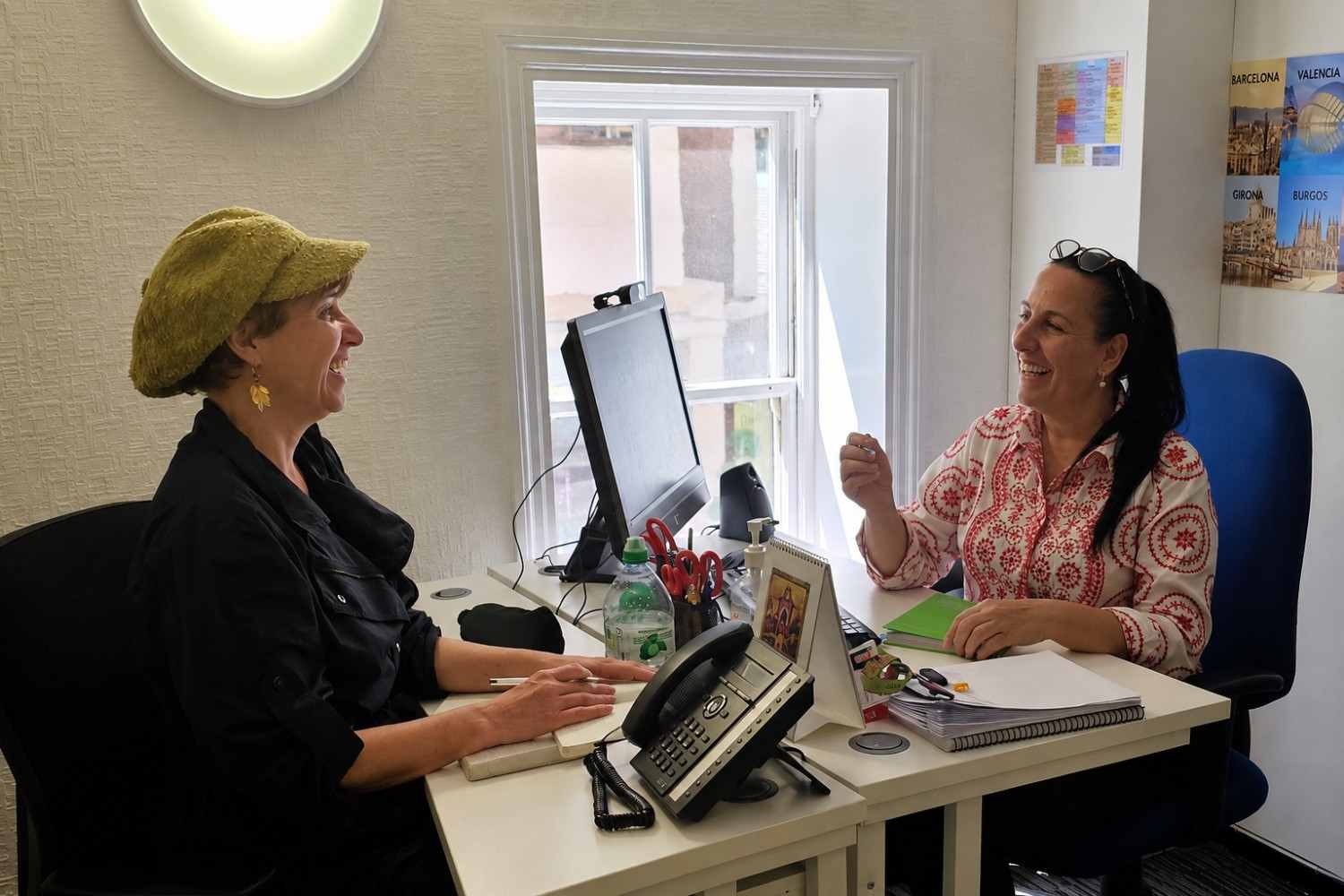
A SIELE exam preparation session with personalised guidance
SIELE exam preparation: personalised guidance, focused practice and strategies to help you perform at your best
  • A1Elementary
  • A2Elementary
  • B1Intermediate
  • B2Upper-intermediate
  • C1Advanced
  • C2Near-native

A free Spanish test helps determine your current level, identify your strengths and weaknesses, and choose which of my Spanish courses is the right Spanish course for you. From there, I build a plan around your specific needs, using teaching materials chosen to match your goals, because no two students need quite the same thing.

The exams

The exams I prepare students for

Official certificate · valid for life

DELE Exam

The Diplomas de Español como Lengua Extranjera are official Spanish-language qualifications that remain valid for life. Internationally recognised and aligned with the CEFR, they can support academic, professional and personal goals.

Preparation includes mock exams, past papers and focused work on reading, listening, writing and speaking. Students develop exam technique, time management and confidence while also improving their Spanish through films, podcasts, books and articles. As a DELE examiner, I provide first-hand guidance on the assessment criteria and what examiners expect.

Official certificate · digital

SIELE Exam

SIELE is a modern digital certificate of Spanish-language proficiency, internationally recognised and aligned with the CEFR. It assesses reading, listening, writing and speaking through an online format.

Preparation includes realistic practice tests, targeted work on weaker areas and guidance on timing, written responses and recorded speaking tasks. Students also become familiar with the digital platform so that both the exam content and technical format feel comfortable on the day. As a SIELE examiner, I provide clear insight into the assessment criteria and exam requirements.

British system · around age 16

Spanish IGCSE

A crucial step in the British education system and an important foundation for higher education and vocational training in the UK. Designed for around sixteen-year-olds, though younger and older candidates can sit it too. I prepare students thoroughly across reading, writing, listening and speaking, so they walk in ready and calm. The Spanish Language exam typically has about 121 questions to complete in roughly 90 minutes across three separately timed sections. These include two listening parts built around short oral exchanges and longer spoken selections, plus one reading section based on passages and authentic materials.

British system · pre-university

Spanish A-Level

A stepping stone to university and to strong academic and professional careers, suiting students heading into a wide variety of courses and future paths. Preparation builds the vocabulary, grammar and fluency needed to perform with real confidence at this level.

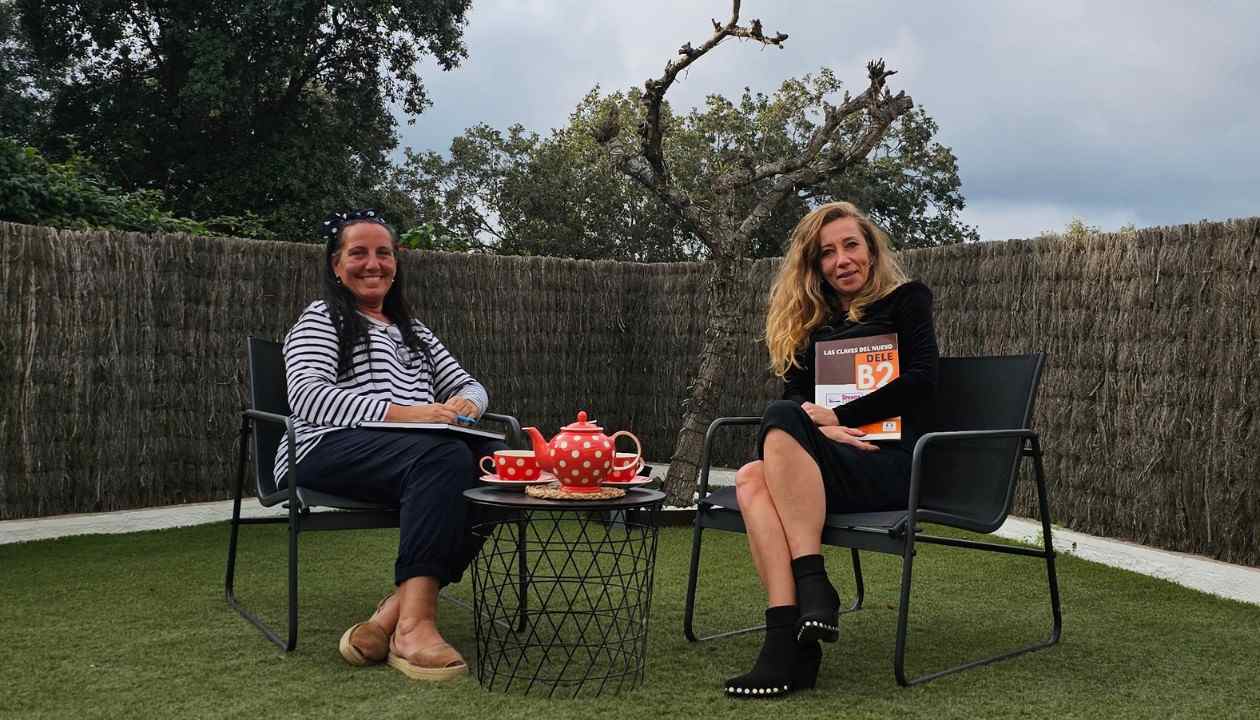
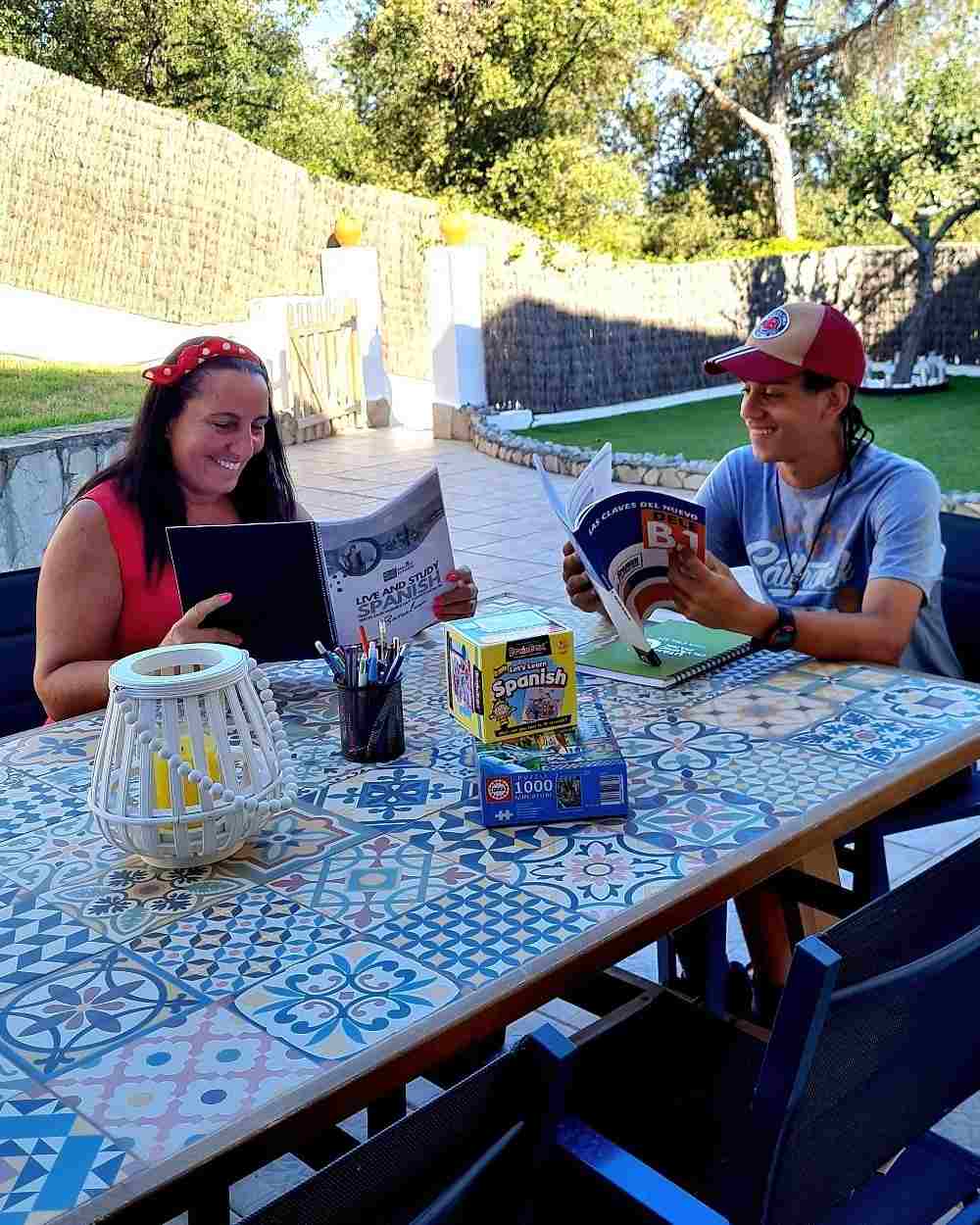
Preparing for the DELE exam outdoors in Menorca
Spanish prep for the DELE exam outdoors: focused practice in a relaxed and inspiring setting

Not sure which exam is the right fit? Tell me the goal and I'll point you in the right direction.

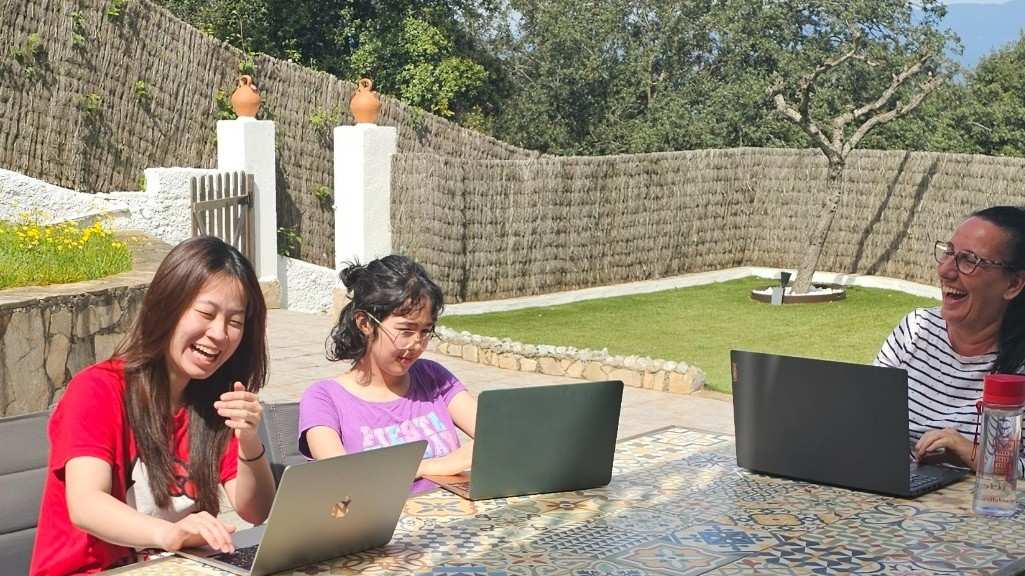
Two Spanish A-Level students preparing for their final exams
Preparing two Spanish A-Level students for their final exams: focused learning, plenty of practice and lots of conversation along the way
For parents

A note to parents

If you're looking for someone to prepare your son or daughter, you're in good hands. I work patiently and personally with teenagers and younger students, building both their Spanish level and their confidence. The work is structured and progress is tracked clearly, so you can always see what's been covered and how they're improving week by week. As a native speaker and examiner, I make sure they're genuinely ready.

Formats

Two ways to prepare for the Spanish language proficiency

From anywhere

Online One-on-One Tuition

Personal, focused lessons over video, wherever you are, that let you study the language flexibly around your schedule. Some students want an intensive run of sessions before an exam; others prefer steady weekly lessons over several months. We'll shape a plan around your schedule, goals, and plans.

In Menorca

Spanish Homestay Immersion Programme (SHIP)

For students who want to accelerate, nothing matches living and learning in Spanish. Staying with me in Menorca combines focused exam preparation with full immersion, practising Spanish from morning to night, in virtually everything you do, in real everyday situations, which helps you learn Spanish through constant real-life speaking and listening. It's the fastest, most natural way to build the fluency and confidence the exams reward.

A DELE preparation lesson taking place outdoors
DELE exam preparation outdoors: combining focused study with a relaxed setting that keeps Spanish flowing naturally
Method

How preparation works

My approach is personal and built around you:

01

The four core skills

The four core skills every exam tests, reading comprehension, listening, writing and speaking, developed so you can communicate effectively in most situations.

02

The real exam structure

The real exam structure is practised in full, from tasks where you fill each blank and choose the correct answer in reading or listening sections to understanding directions, completing sentences, and answering spontaneously, with preparation also covering transitional phrases and conjunctions so you can follow sentence structure and connect clauses accurately. Exam formats vary, and I'll make each one feel familiar long before the day.

03

Strong foundations

Strong foundations in grammar, vocabulary and idiomatic expressions, the words and building blocks of true fluency, so your knowledge of the language becomes complete and dependable, with the grammar and vocabulary material becoming easier to retain. Use flashcards to memorise vocabulary and noun genders, practise active recall by covering notes and forcing self-translation, and write paragraphs or essays by hand to reinforce spelling and accents.

04

Clear progress reviews

Clear progress review week by week, with honest feedback and practical tips that assess your progress clearly over time and help you keep improving.

05

Examiner techniques

Examiner techniques for reading questions correctly, managing time, and answering with confidence. To help you pass with confidence, study for 30 to 45 minutes a day rather than cramming, and listen to podcasts or other native media to improve listening comprehension.

Reviews

Reviews from my students

“Passed my DELE B2 first time. Mónica knew exactly which tasks would trip me up and we drilled them until the real exam felt like just another lesson.”
★★★★★ Emma S. DELE B2 student · UK
“The SIELE's digital format worried me more than the Spanish. By exam day I knew the platform inside out and scored higher than I ever did in practice.”
★★★★★ Lucas H. SIELE candidate · Netherlands
“Our daughter's IGCSE speaking was her weak point. Mónica turned it into her best paper. The weekly progress updates meant we always knew where she stood.”
★★★★★ Rachel T. Parent of an IGCSE student · UK
“A-Level Spanish felt like a mountain. Mónica broke it into steps, tracked everything, and I walked out of my orals actually smiling. Now off to study languages at uni.”
★★★★★ Olivia P. A-Level student · UK
“After failing my first attempt elsewhere, I found Mónica. Having an actual examiner explain what earns marks changed everything. Passed with room to spare.”
★★★★★ Marco V. DELE retake student · Italy
“Two intensive weeks in Menorca before my exam: lessons in the morning, real Spanish life all day. I learned more than in the whole year before.”
★★★★★ Sophie L. SHIP exam student · France
“I froze in speaking tests, every time. Mónica rehearsed the oral format so patiently that on the day it felt like chatting with her. Best marks of my whole exam.”
★★★★★ Adam N. IGCSE student · UAE

My promise

The certificate is the goal, but the deeper aim is for every student to leave able to use Spanish in real life: to read, to hear and understand native speakers, to express yourself, and to communicate naturally. That's the real prize you carry with you afterwards, and my hope for every student I teach.

If you're unsure which exam or level is right for you or your child, get in touch. Tell me a little about the goals and current level, and I'll help you map the path forward, and share the key materials we'll use to get you there.

Contact me to start your exam preparation
FAQs

Exam preparation, answered

The best way to study for a Spanish exam is to prepare for the exam itself, not just the language. That means knowing its structure, practising with past papers and mock exams, and learning the techniques assessors reward. I recommend short, regular sessions of around 30 to 45 minutes a day rather than cramming, combined with native media like podcasts and films to sharpen your listening. As a certified examiner, I build all of this into a plan around your level.

These are the six levels of the Common European Framework of Reference for Languages (CEFR), the scale most Spanish exams are mapped to. A1 and A2 are elementary, B1 and B2 are intermediate and upper-intermediate, and C1 and C2 represent advanced fluency and near-native mastery. At the start of our work together I'll assess your true level on this scale, so we know exactly where to focus and which exam suits you.

The official certificates are the DELE (Diplomas de Español como Lengua Extranjera) and the SIELE. The DELE is awarded on behalf of Spain's Instituto Cervantes and accredits your Spanish for life, while the SIELE is the leading digital certificate. Both are internationally recognised and mapped to the CEFR. For school qualifications, students in the British system typically sit Spanish IGCSE and A-Level, which I also prepare students for.

It depends on your goal. The DELE is a permanent, prestigious certificate often preferred for academic recognition and official purposes, awarded at a single fixed level. The SIELE is more flexible and modern, sat on screen, with faster results and the option to test individual skills. If you want a lifelong, widely recognised diploma, DELE often fits best; if you want speed and flexibility, SIELE may suit you better. Tell me your goal and I'll guide you.

Neither is inherently harder, since both test the same four skills against the same CEFR levels; the difference is in format and feel. The DELE is a traditional exam taken at one chosen level, while the SIELE is adaptive and scores you across a range, which some students find less pressured. What makes either feel manageable is familiarity, and I prepare you fully for the format so nothing on the day comes as a surprise.

Passing comes down to three things: solid foundations in grammar and vocabulary, genuine practice across all four skills, and exam technique like reading questions correctly and managing your time. I track your progress week by week with honest feedback, rehearse the real exam structure until it feels familiar, and share the examiner's perspective on exactly what earns marks. The aim is for you to walk in prepared and calm, not just rehearsed.